Name on the Map
Bloedel Reserve
Bloedel Reserve takes its name from Virginia and Prentice Bloedel, who purchased the Bainbridge property in 1951 and lived there for more than thirty years.
The place today

The account and its sources
Bloedel Reserve takes its name from Virginia and Prentice Bloedel, who purchased the Bainbridge property in 1951 and lived there for more than thirty years.
Prentice Bloedel was an executive in his family’s timber business, which eventually became part of MacMillan Bloedel. The family’s wealth came from an industry that transformed Northwest forests. Prentice also promoted reforestation, waste reduction, and the reuse of wood byproducts within that industry.
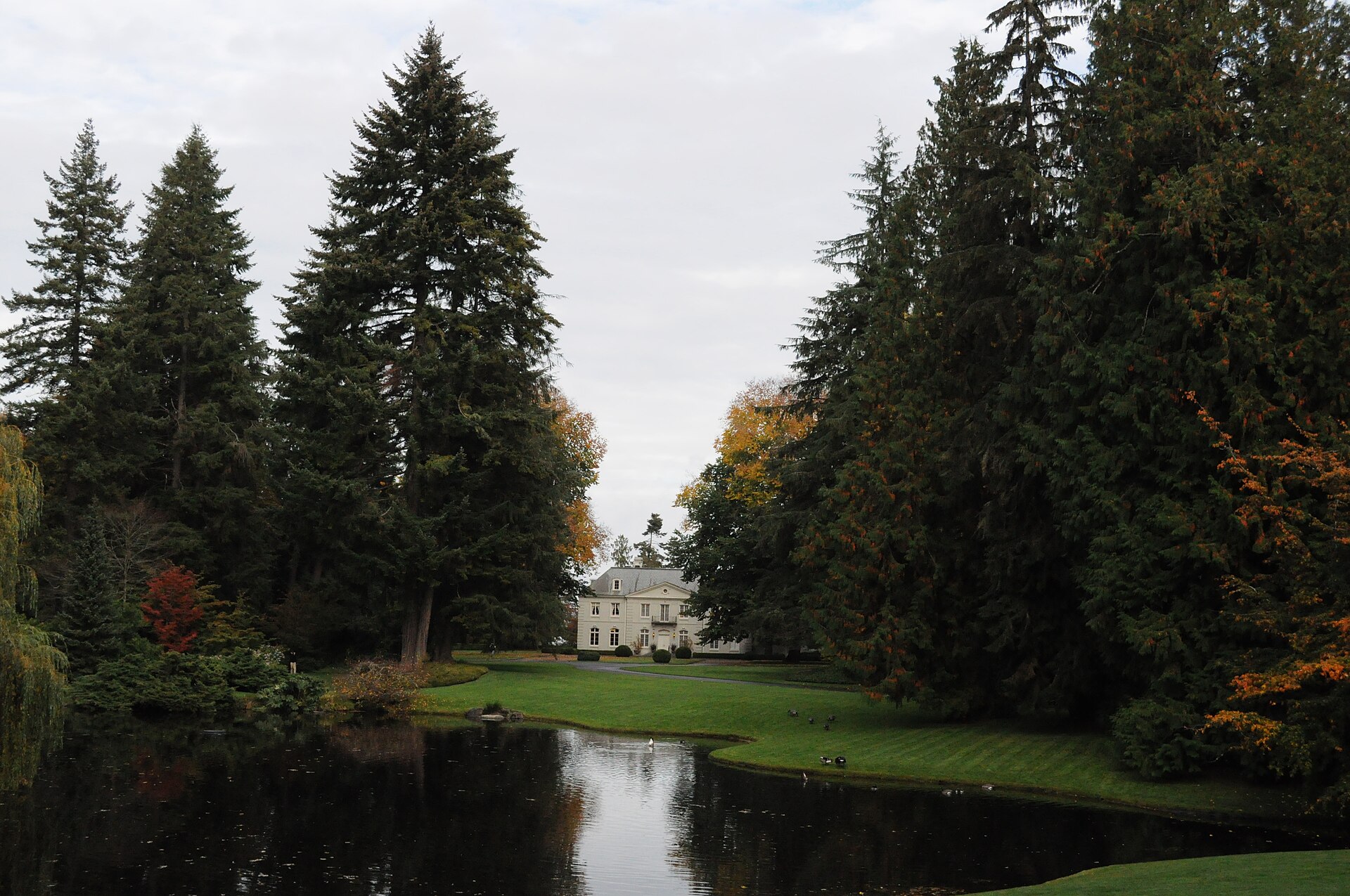
Virginia and Prentice worked with architects and landscape designers to shape their property into a series of gardens, ponds, meadows, and forest spaces. Their collaborators included Thomas Church, Richard Haag, Fujitaro Kubota, and Iain Robertson. The Bloedels later gave the property to a nonprofit organization so it could be opened to the public. Today the Reserve encompasses about 140 acres.
The name reflects the couple who created and preserved the public garden, but the land’s history did not begin with them. Bloedel Reserve stands within the ancestral territory of the Suquamish People, whose stewardship reaches back since time immemorial.
Sources & citations
Joe Mabel. Bloedel house, now the visitor center, and part of the gardens, October 21, 2009. CC BY-SA 3.0.
Wikimedia Commons · Current-site photographView sourceBloedel Reserve, Our History
Bloedel Reserve · Institutional historyView sourceUniversity of Washington Libraries, Mary Randlett photographs
University of Washington Libraries · Archival collection guideView sourceHistoryLink, Prentice Bloedel
HistoryLink.org · Sourced historical essayView sourceSociety of Architectural Historians Archipedia, Bloedel Reserve
Society of Architectural Historians Archipedia · Architectural historyView source