Name on the Map
Camp Yeomalt
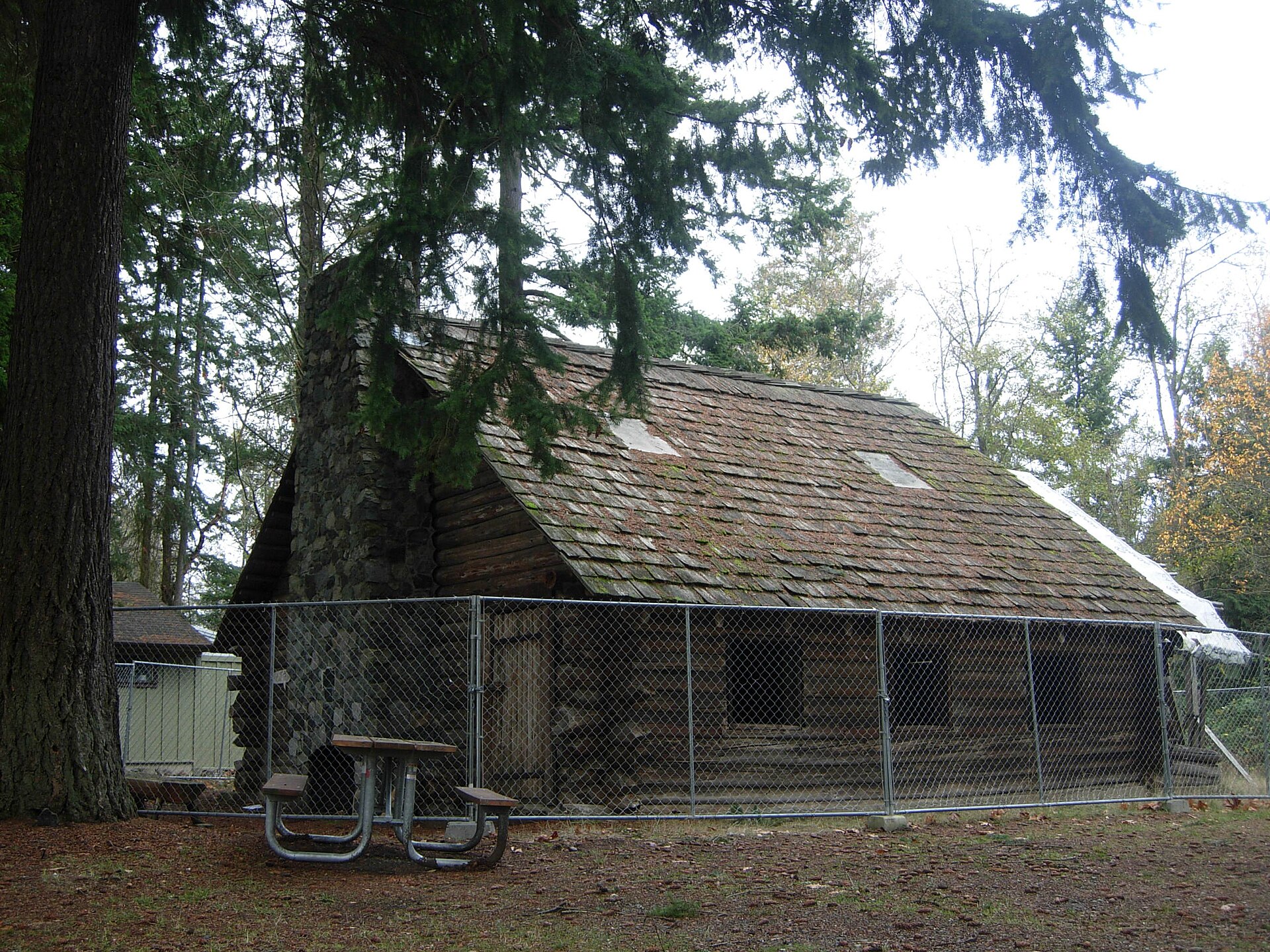
The log cabin at Camp Yeomalt was built in 1935 as a Works Progress Administration project for Bainbridge Island scouting.
The place today

The account and its sources
The log cabin at Camp Yeomalt was built in 1935 as a Works Progress Administration project for Bainbridge Island scouting. The camp was originally named Camp Major Hopkins for Maurice Jayne Hopkins, a local scouting leader. The Park District acquired the property in 1987 and renamed it Camp Yeomalt in 2000.
Hopkins was a geologist and engineer who helped establish scouting on Bainbridge Island. Local accounts credit him as scoutmaster of the island’s first Boy Scout troop and connect his engineering career to federal dam projects. His relationship with the community, however, was more complicated than the old camp name suggested.
In November 1944, as the government prepared to allow Japanese Americans to return to the West Coast, the Seattle Star reported Hopkins saying it would be better for them not to return to Bainbridge. Densho oral histories also remember him as part of the local effort to prevent Japanese American neighbors from coming home after incarceration. That history belongs in his biography alongside his work with young people.
The present name comes from the nearby Yeomalt place-name rather than another individual. Non-Tribal sources describe Yeomalt as an English rendering of a Lushootseed name connected with winds meeting near the point. The spelling, meaning, and cultural explanation should be reviewed by the Suquamish Tribe before publication.
Sources & citations
Murderbike. Camp Major Hopkins, now Camp Yeomalt, December 10, 2007. Released into the public domain by the photographer.
Wikimedia Commons · Current-site photographView sourceBainbridge Island Park District, Camp Yeomalt Cabin history
Bainbridge Island Park District · Institutional historyView sourceCity of Bainbridge Island, Camp Yeomalt proclamation, April 10, 2006
City of Bainbridge Island · Government proclamationView sourceThe Seattle Star, November 25, 1944, page 2
Washington Digital Newspapers · Contemporary newspaperView sourceDensho, Mary Woodward Interview
Densho · Oral history transcriptView sourceBainbridge Island Review, “Thanks go to those who support Yeomalt Cabin,” May 20, 2008
Bainbridge Island Review · Newspaper articleView source